The Revolut app is a revolution in online banking. The most important part is the free multi-currency card linked to your account. With a Revolut card you can travel around the world and pay in over 150 currencies at the real exchange rate with no extra fees (with a few small exceptions), and hold 30 currencies in your account. We can pay with physical, virtual and single-use cards, also with a phone thanks to Apple Pay and Google Pay, or by transfers between users. The card also lets you make free cash withdrawals from ATMs all over the world up to the limit set in your plan.
The Revolut app offers many other benefits too, like international transfers, savings, buying shares and cryptocurrencies. In this post I’ll tell you why I use Revolut cards, how to get started and what to watch out for so you avoid unnecessary costs.
What is Revolut?
Revolut is a so-called fintech, founded on 1 July 2015, which brought a technological revolution to the world of finance. And you have to give it credit, it worked. Revolut now has over 20 million customers worldwide, including over 1.7 million in Poland alone. Revolut services are available in over 36 countries and the company employs over 5,000 people.
In 2018 Revolut received a banking licence from the bank of Lithuania, which gave it a guarantee on customer funds. Thanks to that, funds of up to 100,000 euro are protected by the European deposit guarantee scheme, and Revolut can also offer consumer loans.
Why did I choose Revolut?
If you want to travel the world, you need to be ready for various expenses, such as:
- Tickets
- Accommodation
- Transport
- Food
- Attractions
- Shopping and souvenirs
You’ll probably also want to have some cash on hand. If it’s dollars or euro, you can sort that out even in Polish banks.
You’ll end up paying for most of these things in a foreign currency. Even if the prices on a website are shown in zloty, the amount taken from your account may finally be charged in the local currency. It’s worth being prepared for that so you don’t pay extra for currency conversions.
Sometimes it’s even worth sticking to the currency the website or venue uses by default. Even if it accepts payments in PLN, the conversion may happen in the payment gateway or on your own account. On small amounts you won’t feel it, but when you pay 300 euro (around PLN 1,400) from a PLN account, banks offer a very unfavourable spread of often around 6-8%, and on top of that they have their own currency buying rates (different from the Forex market), so you can overpay around PLN 40-50 on a transaction like that.

Paying for services and subscriptions with a Revolut card
Besides, in the age of services and subscriptions, you may also pay for things like the Adobe package or Google Workspace and have your card charged in euro. If you don’t have a multi-currency card or a good deal at your bank, you’ll definitely get hit hard on those transactions too. You can have up to 6 virtual cards, so you can split them across different services and set a transaction limit, so nobody can charge you more than what you agreed.
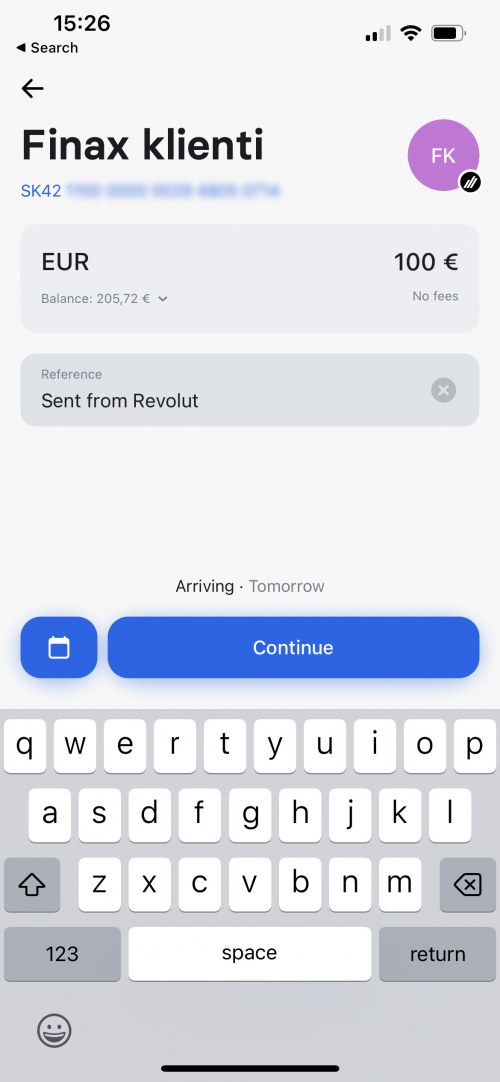
There are quite a few different fintechs offering multi-currency cards these days, but the most popular one right now is the British Revolut. For some people it’s just another “app” or service that isn’t fully a bank. Even so, it already holds a banking licence in the UK and the EU, which makes it what they call an electronic money institution. That lets us get a Polish, European (Lithuanian) or British IBAN, which means we can make international transfers at a low cost or for free. Right now, when I make a transfer in euro from Revolut (with a Lithuanian IBAN) to the Slovak Finax, which also has a euro account, I don’t pay any fee for euro transfers.
Why do I prefer Revolut to the multi-currency card at mBank?
Many banks now offer free multi-currency accounts or multi-currency cards, but in practice it’s not that rosy. In my case mBank lets me open accounts in 11 currencies (vs 30+ in Revolut), and then my card detects the currency I want to pay in and takes the money from that account. But to do that, I first have to convert my zloty, and the bank charges me for it up front. In Revolut I get the best conversion rates and I don’t need to hold the currency in advance, because it happens on the fly. With mBank I later wondered what to do when I had dollars left over in the account, because converting them back to PLN would lose me money again.
Multi-currency card fees
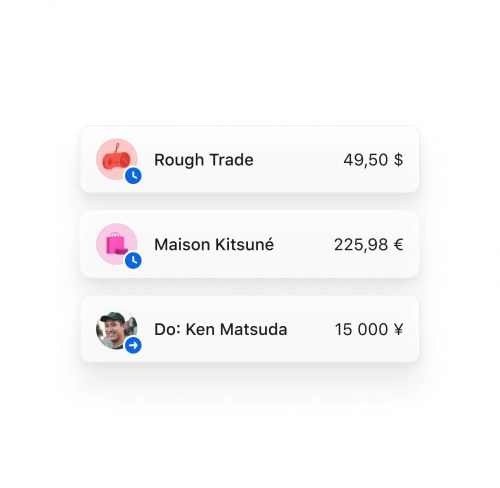
If I didn’t have the currency I wanted to pay in at mBank, they’d charge me a 3.5% fee, so you have to keep an eye on it. Before, you also had to have a separate card for a specific currency, EUR, USD…, and watch out for any fees for holding them. Right now it’s simply a service on an ordinary card, with strings attached.

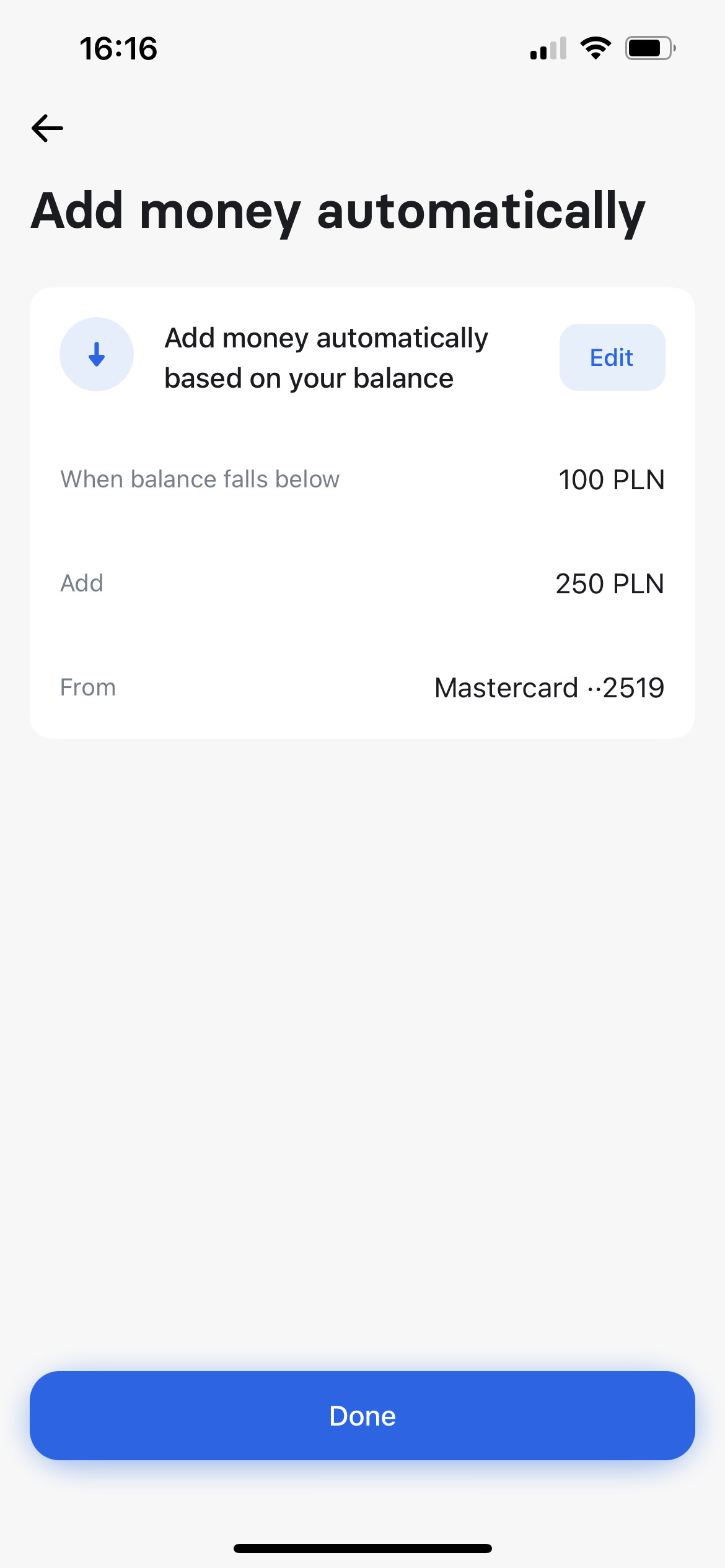
Generally I know that Polish banks like to exploit our inattention and laziness, which they can make good money on. That’s why I now use Revolut cards more often, which I top up with my mBank card (which protects me from the fee) and which also has transaction limits. I have no cards linked to my other accounts at all, so I can sleep easier. Revolut itself is treated as a pre-paid card (in a way it is, because we fund it with a transfer, another card or Apple Pay/Google Pay), but I think you can use it like an ordinary card and protect yourself on several levels, because we can top it up manually or automatically in a way we choose, and on top of that set separate limits and payment methods for each card.
A few years ago I even managed to rent a car in Majorca with a Revolut card, and so far it’s only Wizz Air that doesn’t want to accept Revolut payments on board its planes, which doesn’t bother me, because those are usually short flights and I buy my perfume from Prouve. Nobody knows exactly why, because I saw reviews online saying the transaction went through. I paid on LOT myself and there was no problem. I suspect that because the transactions are offline, “clever” travellers were buying things on an empty or blocked account and Wizz Air couldn’t collect the money from them.
When is it worth having a card from a Polish bank?
Of course there are different situations and it’s worth being ready for anything: we lose the card, someone steals it, or an ATM swallows it. Some situations can be solved from the app, where you block the lost or stolen card and create a new one. But for ATM withdrawals it’s worth having a physical card as a backup, one where you can switch on the multi-currency option, so that even with higher fees you at least have that possibility.
The second situation is that the free Revolut plans only offer cash withdrawals up to the equivalent of PLN 800, after that it’s a 2% fee. So if you want more cash, it’s worth working out whether you have a better option at your bank. Although that 2% fee is often still better than using a card from a Polish bank.
If your trip spans two months, because you fly out at the end of one and come back in the next, you can also split the withdrawal over two months and take out PLN 800 in one and PLN 800 in the other. 😉
What currencies does Revolut support?
In Revolut we can pay in over 150 currencies and hold over 30 currencies in our account. Those 30 currencies we can exchange in advance and keep directly in the account. All the rest will be converted at the moment of the transaction at the interbank rate (at the weekend a 1-2% fee appears).
The currencies you can hold in a Revolut account are:
- euro – EUR
- British pound – GBP
- US dollar – USD
- UAE dirham – ZEA
- Albanian lek – ALL
- Argentine peso – ARS
- Australian dollar – AUD
- Azerbaijani manat – AZN
- Bangladeshi taka – BDT
- Bulgarian lev – BGN
- Bahraini dinar – BHD
- Bermudian dollar – BMD
- Brunei dollar – BND
- Bolivian boliviano – BOB
- Brazilian real – BRL
- Bahamian dollar – BSD
- Botswana pula – BWP
- Canadian dollar – CAD
- Swiss franc – CHF
- Chilean peso – CLP
- Chinese yuan – CNY
- Colombian peso – COP
- Costa Rican colon – CRC
- Czech koruna – CZK
- Indian rupee – INR
- Icelandic krona – ISK
- Norwegian krone – NOK
- Romanian leu – RON
- Thai baht – THB
What is the exchange rate in Revolut?
When you pay with a Revolut card, you pay at no charge at the interbank rate (FX), and you can check it straight away in the app. If we want to exchange currencies in the account, we can do it straight away at the current rate or set an order at a rate decided in advance, if it ever appears. That way we can follow the rates and buy currencies ahead of time when their rate drops, and then pay with them.
There is only one condition. Within a month we can exchange currencies up to the equivalent of PLN 5,000. After that there’s a 0.5% fee. In the paid plans there is no such limit.
Weekend rates
It’s also worth remembering to exchange some currency before the weekend if you want to pay with it, because at the weekend (London time decides) a 1% fee is added, and 2% for Ukrainian hryvnia (UAH) and Thai baht (THB). It’s similar with cash withdrawals. That way, if you already have the currency in the account, we avoid the fee. I think it happens because exchange rates don’t change at the weekend, they just stop on Friday (17:00 New York time), until Sunday (18:00 18:00 New York time) and for safety they add that 1-2% more to the currency purchase as a buffer.
How do I top up a Revolut account?
You can top up a Revolut account from PLN 50. The simplest option right now is Apple Pay and Google Pay. You can also enter the details of your card from a Polish bank, and the payment will be charged in zloty like an online payment. We can also make an easy transfer from ING or mBank, or use an ordinary transfer from another bank to the Polish account number provided by Aion Bank for Revolut. We can also make SWIFT transfers to the Lithuanian account number, but banks may charge a fee for that.


How do I withdraw money from Revolut?
The simplest way is to withdraw money from an ATM, whether in Poland or abroad. We can also make transfers, where a lot depends on the banks. Revolut itself tells you the fee when you place the order. When I make transfers in PLN and euro, I haven’t paid a fee even once.

Peer-to-peer transfers in Revolut
We can also send money to other Revolut users with no fee. Businesses are increasingly using this too, and I’ve already paid this way at a pharmacy, at a hairdresser’s and for attractions in Dubai.

A very handy option on trips, or even day to day, is splitting bills between users. We can do it on single transactions or create a whole bill that we can split between several people, with information about who has already settled up. With friends we can split the bill for a pizza or a trip to the off-licence this way.

How much does a Revolut card cost?
Opening a Revolut account is completely free and you can do it directly from the app. Actually that’s the only option too, because Revolut has no physical branches and everything happens online. We don’t pay for using the app either, as long as we stay within the limits. If we have to pay for something, for example for a transfer, or buying cryptocurrencies or shares, we’re always shown the fee to be paid.

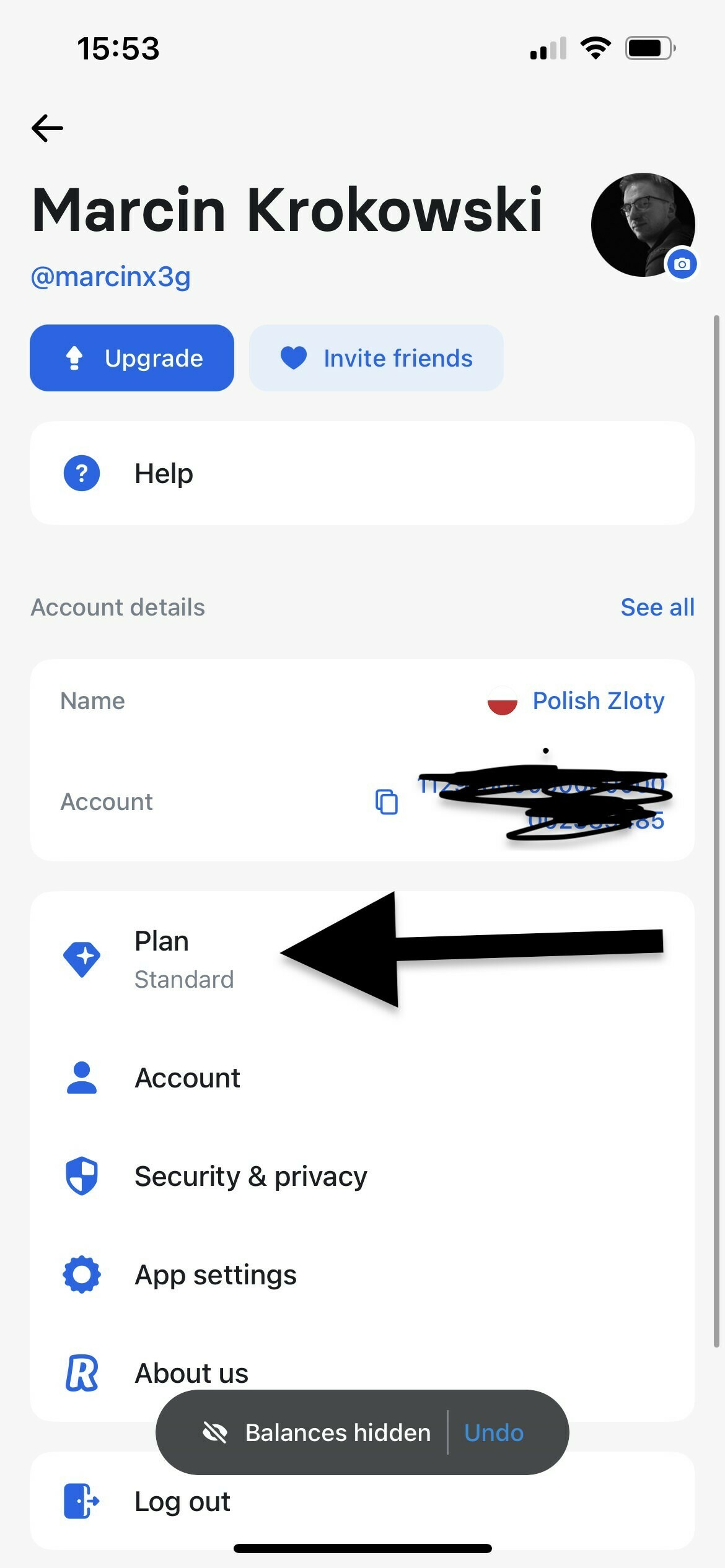
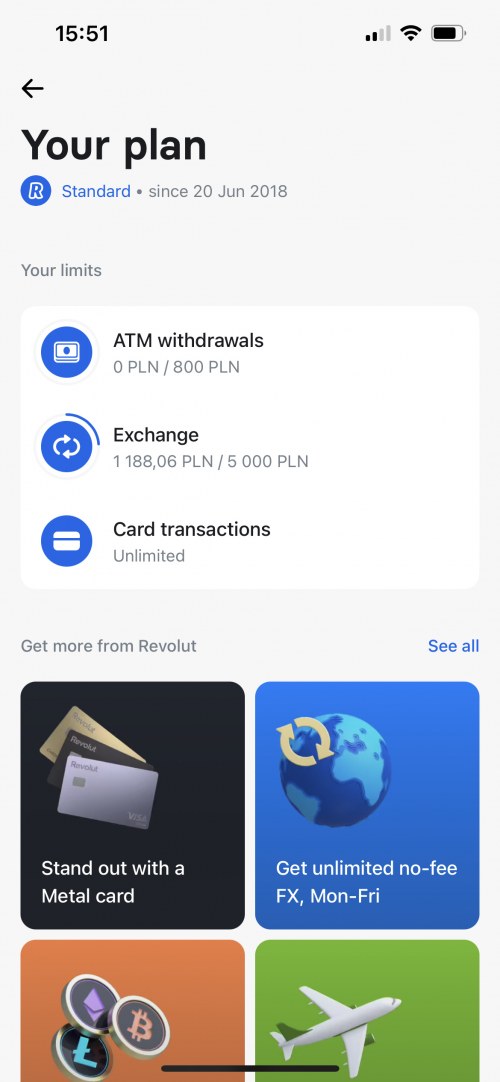
The main limits on the free Standard account are:
- ATM withdrawals (PLN 800 a month, or up to 5 withdrawals. After that 2%, not less than PLN 5)
- Currency exchange (PLN 5,000 a month. After that 0.5%)
There is no limit at all on card payments.
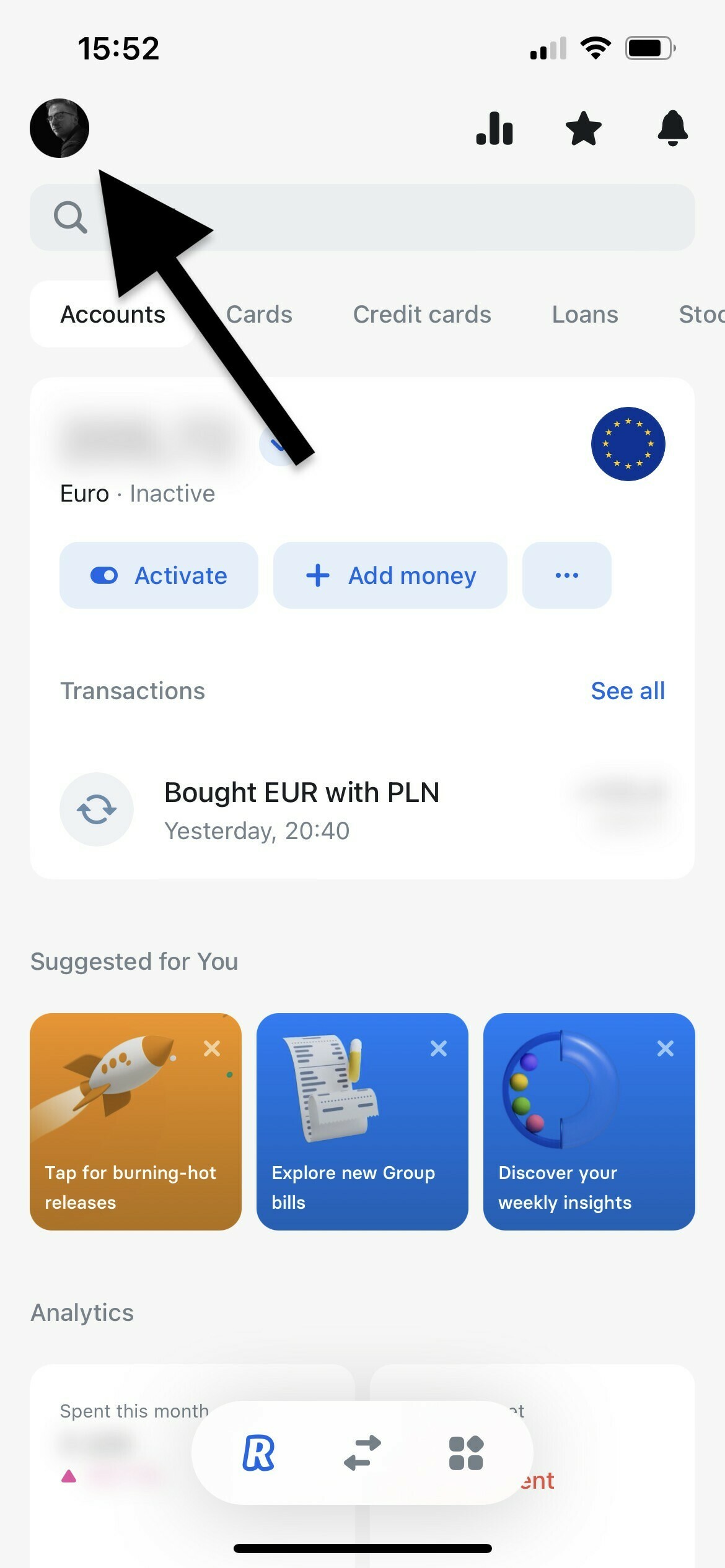
You can check everything by going to your profile in the top left corner of the app and then tapping Plan.
The free Revolut multi-currency card
Right now a physical card on the free plan costs PLN 24.99 + PLN 28.99 for delivery, but Revolut has often offered it for free. Even if you pay for the card, it’s a one-off fee, and if you don’t exceed any limits, there are no extra charges for using it. My free card has already expired once and I got the next one for free.
If you don’t want to withdraw cash (abroad you usually need a physical card for that), you can use a virtual card and link it to Apple Pay and Google Pay and pay with your phone/watch, as well as enter it in apps like Uber, Bolt, Booking, Airbnb and so on.
Personally I don’t carry a physical card with me most of the time, because I usually use it 1-3 times per trip, to withdraw cash or when some terminal doesn’t want to accept a contactless payment.
If you order a physical card, just remember to activate it. Usually you have to use it physically at a terminal and enter the PIN.
Types of Revolut cards
I can choose from 3 types of payment cards: physical, virtual and single-use. We can have up to 6 physical cards, 5 virtual cards and 1 single-use card. Usually one physical card should be enough, useful for ATM withdrawals, plus 1 or more virtual cards. All except the single-use one can be linked to Apple Pay and Google Pay, which gives a lot of convenience and security.
We really only need to take the physical card on trips for cash withdrawals, and use it in rare cases when a contactless payment with your phone or watch won’t go through.
Revolut card security

Revolut cards have a lot of security options available directly from the app. You don’t need to call the bank to use any of them. Everything is right at hand.
From the app we can:
- freeze the card (without having to order a new one)
- change limits
- switch online transactions on/off
- allow transactions based on GPS
- switch magnetic stripe transactions on/off
- switch ATM withdrawals on/off
- switch contactless payments on/off

That way we can have ATM withdrawals blocked by default and activate them only at the start of a trip, when we want to withdraw some cash, and then just pay by card. If we lose the card, we can also block it straight away, and if we’ve only misplaced it, we can activate it again without getting another one.
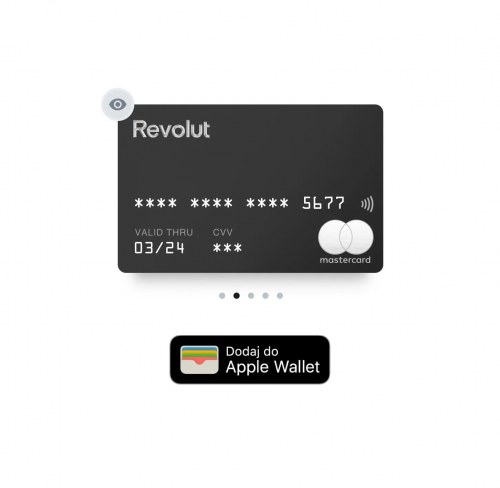
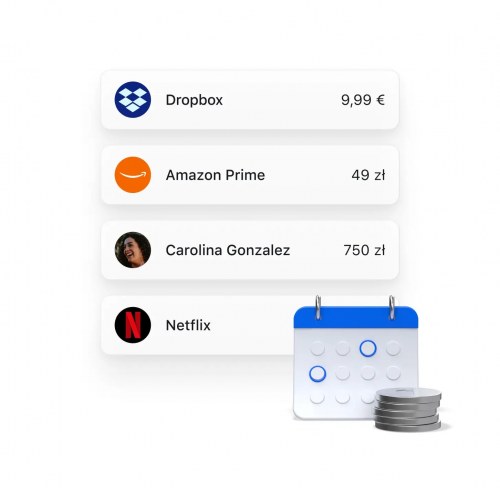
Thanks to these safeguards we can have several cards for different needs, with different functions and limits. I have a separate card just for online payments, so that if I have a problem with the physical card on holiday, I don’t have to worry about moving all my services to a new card. Revolut also lets you switch off subscription payments, in case you can’t sort it out with some service and they keep charging you.
I’ve occasionally been asked to verify an unusual or large transaction. It was rare, so I don’t get annoyed. On the plus side, I can feel safer when every transaction is analysed for potential theft of our funds. One thing responsible for this is the Sherlock technology, which uses AI to analyse every transaction in real time and asks us whether we want to accept it. Revolut cards also support 3-D Secure. And if we want to make a one-off purchase on some website and have doubts, we can use a single-use card, which changes its details after every use, so it can’t be charged again.
What are the fees and limits on the free Revolut plan?
Revolut offers a completely free Standard plan (with some limits), and 3 paid plans, Plus, Premium and Metal, for more demanding users.
The Plus plan is only PLN 14.99 / month, but it also gives you only a few options. Mainly it’s free card delivery, priority customer support, purchase and ticket insurance, and slightly better interest on savings.
The Premium (PLN 29.99 a month) and Metal (PLN 49.99 a month) plans are the same as the Plus plan, only better, plus 2-3 times higher ATM withdrawal limits. On the Metal plan we can withdraw even PLN 3,000 / month and get a metal card, cashback on card payments, medical, baggage and flight insurance and even the excess cover on car rental.
The Standard plan card is completely enough for me, but if you want to check the exact differences, you can see the price list and plan benefits for individuals here.
There are also plans for businesses and freelancers, but I won’t go into them here.
How do I exchange foreign currencies and pay with them in Revolut?
If we want to pay in a foreign currency, we don’t really have to do anything, because it happens on the fly at interbank rates. We only need to remember the PLN 5,000 limit on the Standard plan and the weekend fee, which for most currencies is only 1% anyway. That’s why it’s worth exchanging currency before the weekend if we want to pay by card in shops or online over the weekend.

Online payments
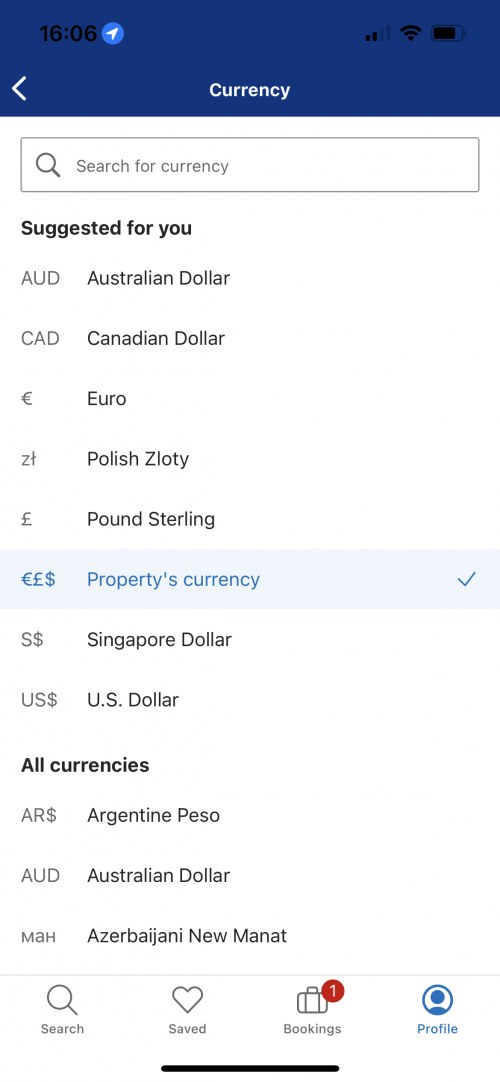
I’ve come across a problem where a price for accommodation shown in zloty is finally charged in another currency, because websites show us an approximate price for convenience. If we pay with a Polish debit or credit card, it can hurt if the bank converts, say, zloty into euro, because that’s the only currency the website takes payments in.
For example, when booking accommodation on Booking, to be sure and avoid surprises, we can choose the venue’s currency straight away and when we pay with a Revolut card we’ll pay practically what we see.
How do I withdraw cash from Revolut?
If we have the free card on the Standard plan, we have a withdrawal limit of the equivalent of PLN 800 or 5 ATM transactions with no extra fee. After that it’s 0.5%, so it’s not a disaster.
Currency conversion at ATMs
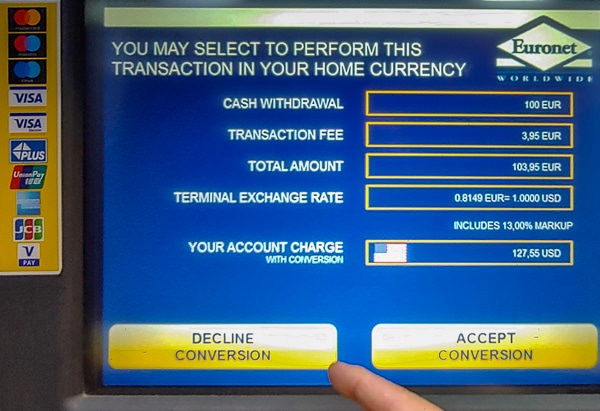
What you need to watch out for is currency conversion at the ATM, which can carry a high fee, so always choose the option to withdraw in the local currency, and the Revolut card will detect which currency to charge or convert for us.
Euronet ATMs and similar
What you should avoid on holiday is Euronet ATMs. In Poland, with Polish cards, we can deposit and withdraw cash at them, probably just to get us used to them. But when you go on holiday, avoid them like the plague. They almost always have some fee, and even withdrawing with a Revolut card I’ve heard of horrendous fees of several dozen zloty. Euronet is the worst rubbish. I used them myself only as a last resort, when we couldn’t withdraw the cash we needed. They usually take around 4 euro in fees for the withdrawal alone, without currency conversion. They’re usually easy to find, in places where it’s hard to find other ATMs, and that’s what they prey on.
Free cash withdrawals with a Revolut card
Usually, to avoid paying a fee, it’s worth using local banks in a given country. Below I give the whole list, but remember to withdraw in the local currency, without conversion (Revolut will do that on your account), and to read the messages on the ATM screen.
- Albania – Credins Bank
- Andorra – Andbank, Morabanc
- England – Lloyds, other ATMs should be fee-free when you withdraw GBP
- Argentina – low fee
- Australia – National Bank of Australia, rediATM, Commonwealth Bank (no fee with a Visa card)
- Austria – Bank Austria/Unicredit, Bankhaus Carl Spangler, Bawag/PSK, Hypo Tirol, Sparkasse, Volksbank Tirol AG
- Belgium – ING, KBC
- Belarus – Belinvestbank
- Bolivia – BancoFie
- Bosnia and Herzegovina – Unicredit, Sberbank, Nova Banka, Addiko Bank
- Brazil – Banco do Brasil, Branco Bradesco
- Bulgaria – DSK Bank, Central Cooperative Bank, United Bulgarian Bank, Fibank, SG Express Bank, Piraeus Bank Bulgaria, Eurobank, Postbank, ProCredit Bank, Tokuda Bank
- Chile – Itau Bank, Scotiabank, Banco International, Corpbanca
- China – Bank of China
- Croatia – Erste Bank, Istarska Kreditna Banka, OTP, RaiffeisenBank, Sberbank, Splitska Banka, Zagrebačka banka
- Cyprus – Alpha Bank, Bank of Cyprus
- Montenegro – Crnogorska Komercijalna Banka
- Czechia – Raiffaisen, Airbank, CSOB, Fio, Komerční Banka
- Denmark – Nordea, Nordjyske Bank
- Dominican Republic – Jumbo ATM
- Ecuador – Banco del Austro, Produbanco
- France – BNP Paribas, Credit Agricole
- Gibraltar – NatWest
- Ghana – Agricultural Development Bank
- Greece – Bank of Chania, HSBC
- Spain – Deutsche Bank, UniCaja,
- Netherlands – ABN-AMRO, ING, Rabobank
- Hong Kong – HSBC
- India – RBL Bank, Bank of Baroda, State Bank of India, Kasturba
- Indonesia – CIMB, Maybank, Bank BCA
- Ireland – Allied Irish Bank, Bank of Ireland
- Israel – Discount Bank
- Japan – 7-Eleven stores (Mastercard only)
- Canada – Tangerine
- Kazakhstan – Sberbank, Halyk Bank
- Kenya – Diamond Trust Bank, Equity Bank, NIC Bank
- Kyrgyzstan – Demir Bank, Optima Bank
- Colombia – BBVA
- South Korea – Shinhan, KB Star
- Kosovo – BKT
- Cuba – Banco Popular de Ahorro
- Latvia – Citadele Banka, Luminor Bank, SEB Banka, Swedbank
- Macedonia – Halkbank, Ohridska Banka, Sparkasse Bank
- Malaysia – Maybank, CIMB Bank
- Malta – Bank of Valleta, HSBC
- Morocco – Al Barid Bank, Banque Populaire, BMCI
- Nepal – Everest Bank, Kailash Bikas Bank, Nepal Bank Limited
- Germany – Baden-Württembergische, Commerzbank, Deutsche Bank, Hypovereinsbank, Landesbank Baden-Württemberg, Postbank, Reisebank, Santander
- Nigeria – Access Bank, Diamond Bank, UBA
- New Zealand – Westpac
- Oman – Bank Dhofar, Bank Muscat
- Peru – BCP
- Poland – Bank Pekao SA, PKO Bank Polski, Santander;
- Portugal – Multibanco
- Russia – Gazprombank, Raiffeisen, Bank Otrkitie, BIN Bank, VTB
- Romania – BCR, Banca Transilvania, OTP Bank, Raiffaisen, ING
- Serbia – Addiko Bank, AIK Banka Jubanka, Erste Bank, Multicard ATM
- Singapore – UOB
- Slovakia – Postova Banka, Unicredit, VUB, Prima Banka
- Sri Lanka – Bank Nations Trust, Bank of Ceylon
- United States – Santander (PA), Sun East Credit Union, WSFS (PA)
- Sweden – Swedbank
- Thailand – all ATMs charge a fee, the lowest is AEON 150 THB
- Tanzania – KCB Bank
- Taiwan – Bank of Taiwan, Cathay Bank, SinoPac
- Turkey – Halkbank, Akbank, Ziraat Bank
- Ukraine – UKRBank
- Uzbekistan – Kapital Bank
- Hungary – Unicredit
- Vietnam – VP Bank, TP Bank, Agribank low fee
- Italy – Unicredit, Raiffaisen
- United Arab Emirates – ADCB


nice information